
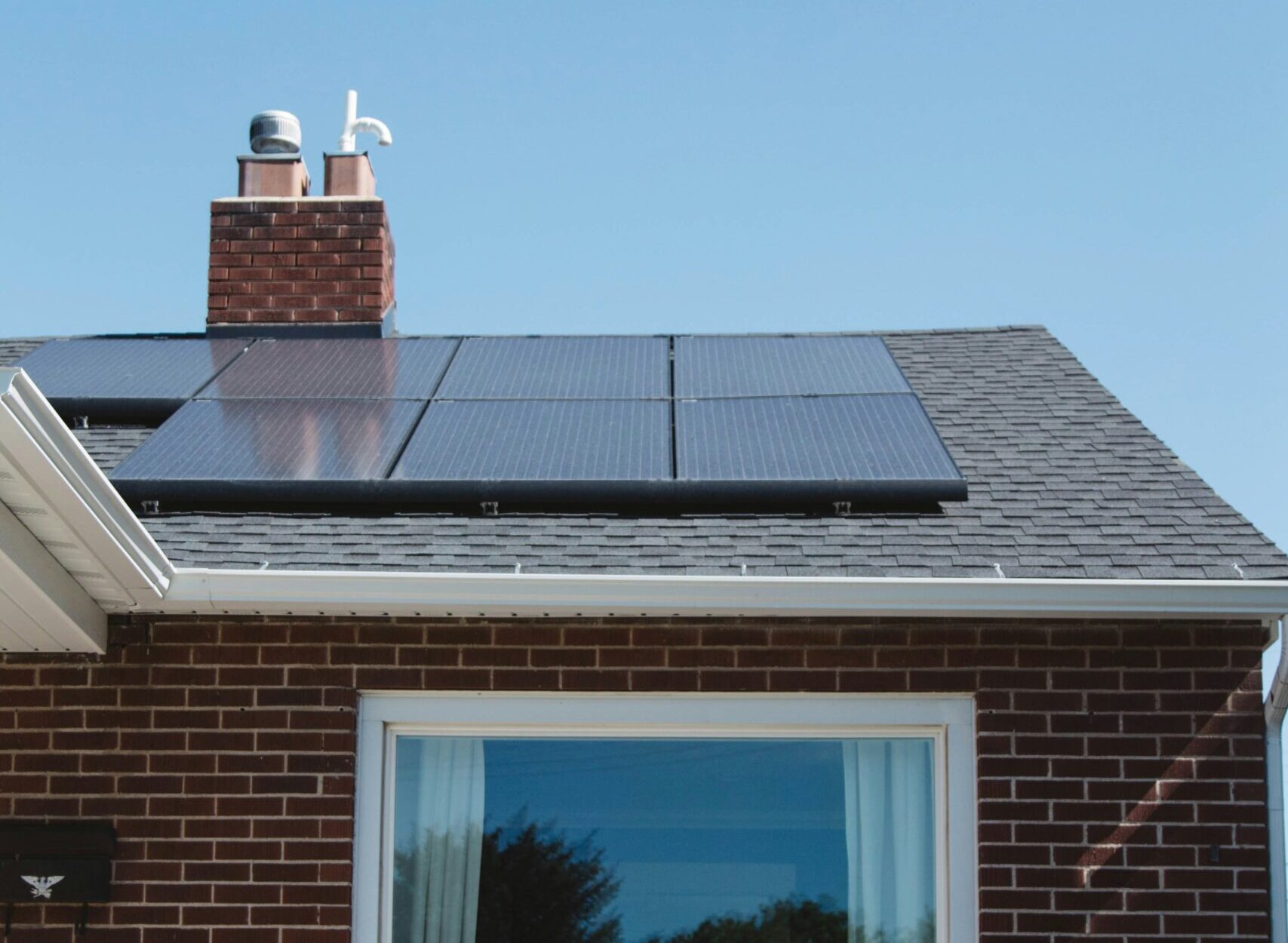
SEATTLE, WA – The Washington State Academy Sciences (WSAS) has released an in-depth report to assist the Washington State Legislature and regulators in developing a new policy framework for distributed solar and energy storage resources in the state.
Enacted in 1998, Washington state’s current Net Energy Metering (NEM) law compensates the owners of smaller-scale solar their full retail electricity rate for excess power they generate and export to the power grid. The amount of smaller-scale solar generation is now nearing or exceeding prescribed thresholds in the original NEM law, opening up the opportunity for utilities to propose successor policies. This is one reason why renewable energy legislation is expected to be on the agenda when lawmakers convene in Olympia in January.
With this threshold in mind, the Legislature commissioned WSAS to study the value of solar and energy storage via a contract with the Washington State Department of Commerce. The resulting study “Beyond Net Metering: Designing a Policy Portfolio for Measuring and Realizing the Value of Distributed Solar and Storage in Washington”, published on October 1, 2026, provides in-depth research and analysis of how policy mechanisms for solar and energy storage can work together to achieve targeted cost/benefit outcomes for Washington.
“With the approaching sunset of our nearly 30-year-old NEM law, Washington state has a generational opportunity to lead in clean energy and that starts with innovative policy development,” said Anjan Bose, chair of the report’s oversight committee and regents professor in the School of Electrical Engineering and Computer Science at Washington State University. “This report is intended to help legislators and regulators understand a very nuanced issue. What other states have done won’t necessarily work here. Washington policymakers need help weighing the trade-offs of different policy options against the energy system’s multiple goals: reliability, affordability, emissions reduction, and equity.”
Bose said the report provides actionable information and cross-cutting insights on solar, energy storage, and energy policy. It includes detailed analysis of costs and benefits, valuation methodologies, assessments of how well different policy mechanisms work, and lessons learned from other states’ efforts to design NEM successor policies. But according to Bose, two takeaways rise to the top.
“The maturation of battery energy storage over the last few years has been a gamechanger,” Bose said. “Energy storage makes power generated by solar panels available to help manage peak demand, maintain stability of the power grid and provide back-up power during outages. Pairing storage with solar installations delivers increased benefits across the board that solar-only can’t come close to.”
Bose also said that rather than enacting a single new rate or tariff to replace NEM, the research concluded that a coordinated portfolio of policy mechanisms – rate structures, grid services tariffs, utility procurements and deployment incentives – will deliver substantially increased value to Washington consumers and businesses.
“No single policy mechanism can deliver all potential benefits effectively,” Bose said. “Rather than developing a one-size-fits-all rate replacement for NEM, a new policy framework might consider multiple levers to drive a combination of benefits while balancing equity. Exploring such a balanced combination, however, will require focused analysis of local power grid data and the policy could allow for such variation.”
The WSAS report also identifies an opportunity unique to Washington state. Energy storage’s ability to make solar generation dispatchable can be extended to the study of how Washington can co-optimize operation of our vast hydro storage resources. Leveraging solar and storage assets can potentially help control costs, save water and mitigate the environmental impacts of frequent and fast ramping at hydropower facilities throughout the state.
“This is the most in-depth research effort the Academy has undertaken – engaging expertise of WSAS members across multiple disciplines along with national experts over two years,” said WSAS Executive Director Melanie Roberts. “It demonstrates our approach of helping policymakers weigh trade-offs as they design policies that advance multiple goals. I want to thank the incredible team of subject matter experts and professionals who led and supported this work.”
Related Posts
October 14, 2026
Research and findings focus on measuring and maximizing the value distributed solar and energy storage can deliver for Washington state.

July 16, 2026
New members were elected in recognition of their scientific achievement and willingness to work on behalf of the Academy for the benefit of Washington state.

July 16, 2026
WSAS members re-elected Jonathan Yoder as Treasurer; and elected Amanda Boyd, Mary Czerwinski, John Stein, and Judith Wasserheit as new board members.
