
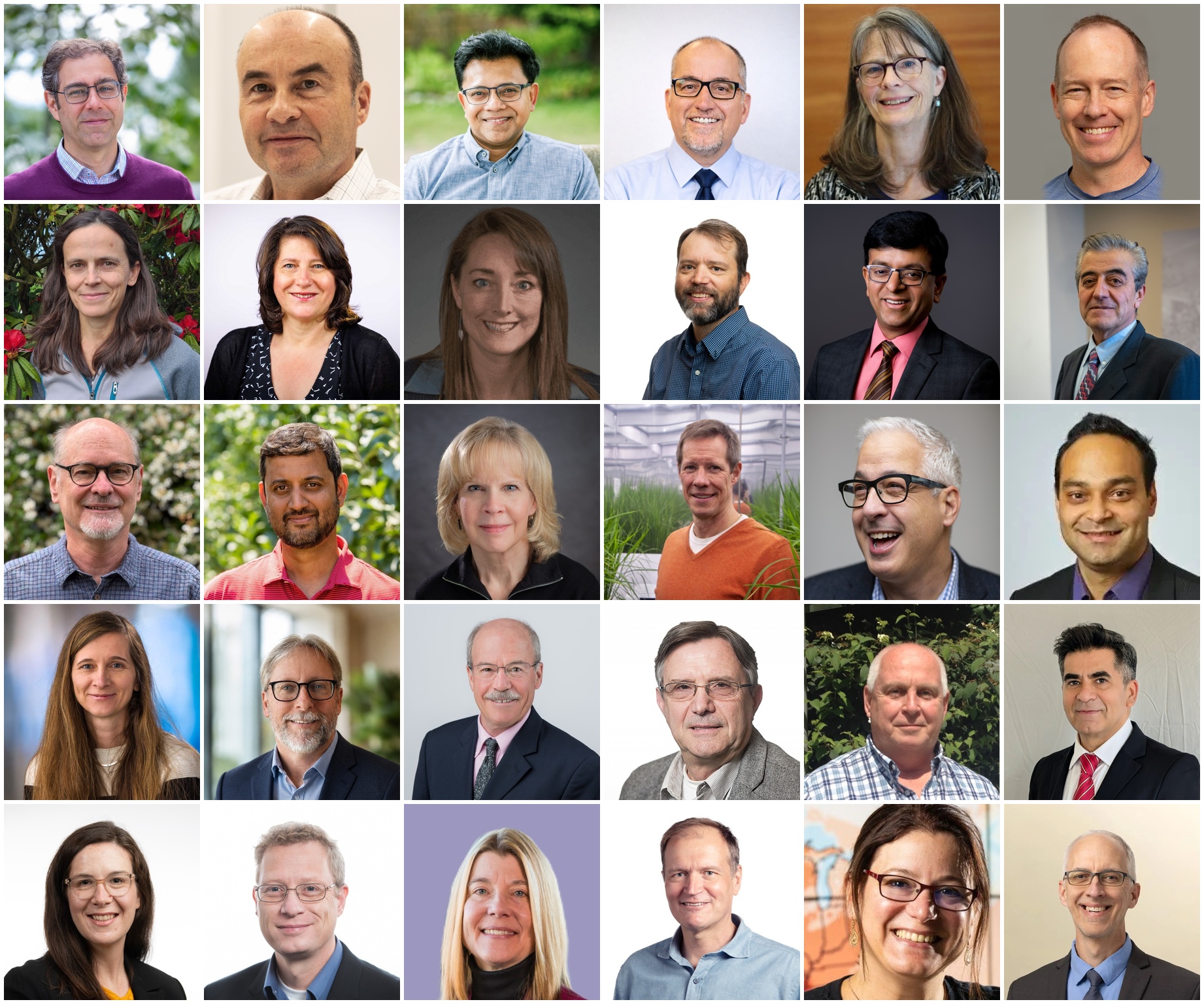
SEATTLE, WA – The Washington State Academy of Sciences (WSAS) announced today the election of 30 new members in recognition of their outstanding record of scientific and technical achievement and willingness to assist the Academy in providing the best available scientific information and technical understanding to inform complex policy decisions in Washington.
The 2026 class of new members is composed of 26 scientists and engineers elected by their WSAS peers and four members recently elected to the National Academies of Science, Engineering, or Medicine or awarded the Nobel Prize, who reside or work in Washington state.
New members will be inducted at WSAS’s Annual Induction Ceremony and Innovation Showcase at Bell Harbor Conference Center in Seattle, Washington on October 8, 2026.
Individuals directly elected by WSAS membership:
Alberto Aliseda Perez de Madrid, Chair of the Department of Mechanical Engineering and PACCAR Endowed Professor, University of Washington
For significant contributions to scientific understanding of multiphase and biomedical flows, including the role of fluid mechanics on arterial disease, heart failure, biomedical devices, and surgical planning for respiratory disease, through work combining rigorous experimentation and analysis that has influenced both engineering and clinical practice.
Dwayne Arola, Professor, Materials Science and Engineering, University of Washington
For pioneering research on structure–processing–property relationships and the aging of hard tissues that has shaped modern oral health science, and for influential contributions to advanced manufacturing, biomechanics, and bioinspired materials—coupled with exemplary educational leadership—that have made a lasting impact across disciplines and the STEM community.
Anirban Basu, Professor and Stergachis Family Endowed Director, The CHOICE Institute, School of Pharmacy, School of Public Health, University of Washington
For pioneering health economic methods—including causal estimation of personalized treatment effects, cost-effectiveness frameworks, and value-of-information analysis—that have shaped national drug pricing policies, international discussions on the economics of innovation, and the scientific foundations of the economics of precision medicine.
Haluk Beyenal, Professor, Chemical Engineering and Bioengineering, Voiland College of Engineering and Architecture, Washington State University
For pioneering electrochemical engineering of microbial systems, including invention of electrochemical bandage and catheter technologies for infection control, and foundational advances in electrochemically active biofilms linking environmental and clinical systems.
Lindsey du Toit, Professor and Department Chair, Department of Plant Pathology, Washington State University Mount Vernon Northwestern Washington Research and Extension Center
For outstanding research contributions to plant pathology and food security, and for leadership at the statewide, national, and global levels, including past president of the American Phytopathological Society and current Chair of the WSU Department of Plant Pathology.
Ruth Etzioni, Professor, Public Health Sciences Division, Fred Hutchinson Cancer Center, University of Washington
For pioneering statistical models that transformed cancer early detection and screening policy, reshaping national and global guidelines and advancing equitable public health decision‑making, and for exceptional leadership, cross‑disciplinary collaboration, and mentorship, influencing generations of scientists.
Tessa Evans-Campbell, Professor, Executive Director, Indigenous Wellness Research Institute, School of Social Work, University of Washington
For pioneering research across historical trauma, cultural buffers, and healing; substance use/misuse prevention; indigenous health disparities and family wellness; and youth health interventions.
Judah Friese, Radiochemist, Laboratory Fellow, Pacific Northwest National Laboratory
For advancing technologies that define modern nuclear explosion detection through leadership of U.S. and international radionuclide monitoring and nuclear forensics efforts, and for contributions to global initiatives and innovative xenon analysis methods that have strengthened national security, elevated Washington state’s scientific stature, and enhanced worldwide nonproliferation capabilities.
Girish Ganjyal, Professor and Extension Food Processing Specialist, School of Food Science, Washington State University, WSU Extension
For pioneering work in food processing research and extension, contributing to crop, product, and market diversity, and for providing critical training to food industry professionals, to bolster both human health and the regional economic landscape.
Dogan Gursoy, Regents Professor and Taco Bell Distinguished Professor, Carson College of Business, Washington State University
For globally recognized scholarship in AI-enabled service systems, sustainability, and consumer behavior that has shaped AI adoption, sustainable tourism, and crisis resilience research.
Steven Hahn, Professor, Division of Basic Sciences, Fred Hutchinson Cancer Center
For transformative discoveries in eukaryotic transcription, structural insights into the transcription machinery, and innovative methodologies that have reshaped the field and advanced global understanding of gene regulation, and for sustained leadership, collaboration, and mentorship that have enabled new scientific and technological progress.
Ananth Kalyanaraman, Professor and Director, School of EECS, AgAID Institute, Washington State University
For fundamental contributions to the fields of parallel computing and computational biology that have led to genomic discoveries, and for founding leadership of the NSF–USDA AgAID Institute, advancing AI-driven innovations and tools for Washington state agriculture.
Margaret Kuklinski, Professor, School of Social Work, University of Washington, Social Development Research Group
For contributions to the economic assessment of prevention programs addressing substance abuse and mental health, and for advancing community-engaged research, and effective communication of findings to different audiences.
Mark Lange, Professor and Director, College of Agricultural, Human, and Natural Resource Sciences, Institute of Biological Chemistry, Washington State University
For elucidating biosynthetic pathways for essential oils and oleoresins, translating these discoveries into commercial mint and cannabis cultivars, and engineering the production of the anticancer drug Taxol, bridging academic and corporate plant biochemistry.
Phillip Levin, Research Professor, School of Marine and Environmental Affairs, University of Washington
For leadership and contributions in ecosystem-based management, salmon conservation, urban ecology, and pioneering contributions to the development of social-ecological approaches to environmental problem solving.
Manu Parashar, Senior Product Director, Transmission Product Management, GE Vernova
For leadership in the development and global adoption of synchrophasor technology systems to provide grid operators with the software intelligence needed for 24/7 reliable power delivery.
Ulrike Peters, Associate Director for Public Health Sciences, Division of Public Health Sciences, Fred Hutchinson Cancer Center, University of Washington
For integrating large‑scale genomic, environmental, and tumor data to advance colorectal cancer prevention and reduce population disparities, and for her leadership at Fred Hutch, shaping precision prevention and population health science.
Kirk Peterson, Professor, Chemistry, Washington State University
For his innovative work in developing methods for high accuracy computations of the properties of rare or difficult to handle materials.
Glenn Prestwich, President, Medicinal Chemistry, Clear Solutions Biomedical LLC
For distinguished contributions to biomedical research in understanding cellular response pathways that can lead to new therapeutic targets for pharmaceutical agents, and for recognized and transformative leadership in entrepreneurship and translational medicine that brings the benefits of scientific discoveries to society to improve human health.
Nikolla Qafoku, Chief Scientist and Laboratory Fellow, Earth Systems Science Division, Pacific Northwest National Laboratory, Affiliate Professor, University of Washington, Department of Civil and Environmental Engineering
For his seminal leadership and sustained contributions to soil and agricultural science and environmental geosciences, spanning basic and applied research, university-level teaching and mentoring, and exceptional service.
Michael Regnier, Dr. James B. Bassingthwaighte Endowed Faculty Fellow in Bioengineering, Professor of Bioengineering; Director, Center for Translational Muscle Research; Associate Chair of Research and Translation, Department of Bioengineering, University of Washington
For internationally recognized leadership in discovering the molecular mechanisms of contractile dysfunction with familial genetic mutations that lead to muscle dysfunction with disease, the design of novel, targeted therapies, and training the next generation of scientists and engineers to have further impact in understanding and treating heart failure and skeletal muscle diseases.
Dushyant Sahani, Professor and Chair of Radiology, University of Washington
For contributions to the science and clinical practice of radiological imaging and for leadership in national programs and professional and scientific societies that advance academic radiology.
Karma Sawyer, Division Director, Electricity Infrastructure and Buildings, Energy and Environment Directorate, Pacific Northwest National Laboratory
For leadership of nationally recognized grid and buildings research that has shaped Washington State energy programs and policies, advanced grid modernization, accelerated energy technology deployment, and fostered robust partnerships with industry and academia.
Kevin Schneider, Laboratory Fellow, Pacific Northwest National Laboratory, Research Professor (Joint Appointment), Washington State University
For engineering contributions and professional leadership in electric power systems in the State of Washington and nationally.
Nathalie Voisin, Chief Scientist, Earth Systems Predictability and Resiliency Group, Pacific Northwest National Laboratory
For pioneering the integration of climate science with power systems studies through computational, data-driven, experimental approaches, resulting in significant cost savings for energy customers and a safer, more reliable grid.
Greg Zweigle, Senior Vice President of Technology, Research and Development, Schweitzer Engineering Laboratories, Washington State University, EECS Executive Council
For technical innovation associated with advanced electric power protection and control technology.
Washington residents elected to the National Academies of Sciences (NAS), Engineering (NAE), or Medicine (NAM), or awarded the Nobel Prize:
Mary E. Brunkow, Nobel Laureate; Distinguished Investigator, Genetics, Institute for Systems Biology, Nobel Prize
For discoveries concerning peripheral immune tolerance.
Douglas Christopher Burger, Corporate Vice President and Technical Fellow, Microsoft, NAE
For accelerating cloud-scale computing and networking infrastructures with field-programmable systems.
Jill Seebergh, Principal Senior Technical Fellow, The Boeing Company, NAE
For materials and coating processes that enable efficient and sustainable aircraft production, performance, and safety.
Karel Svoboda, Executive Vice President and Director, Neural Dynamics, Allen Institute, NAM
For discovering synaptic mechanisms of learning and neural circuit mechanisms underlying planning and movement, and for developing widely used microscopes, molecular tools, and software for cellular imaging in the intact brain.
Related Posts
October 26, 2026
High school students from across the state were recognized for their outstanding original scientific research.

October 14, 2026
Research and findings focus on measuring and maximizing the value distributed solar and energy storage can deliver for Washington state.
July 16, 2026
New members were elected in recognition of their scientific achievement and willingness to work on behalf of the Academy for the benefit of Washington state.
