
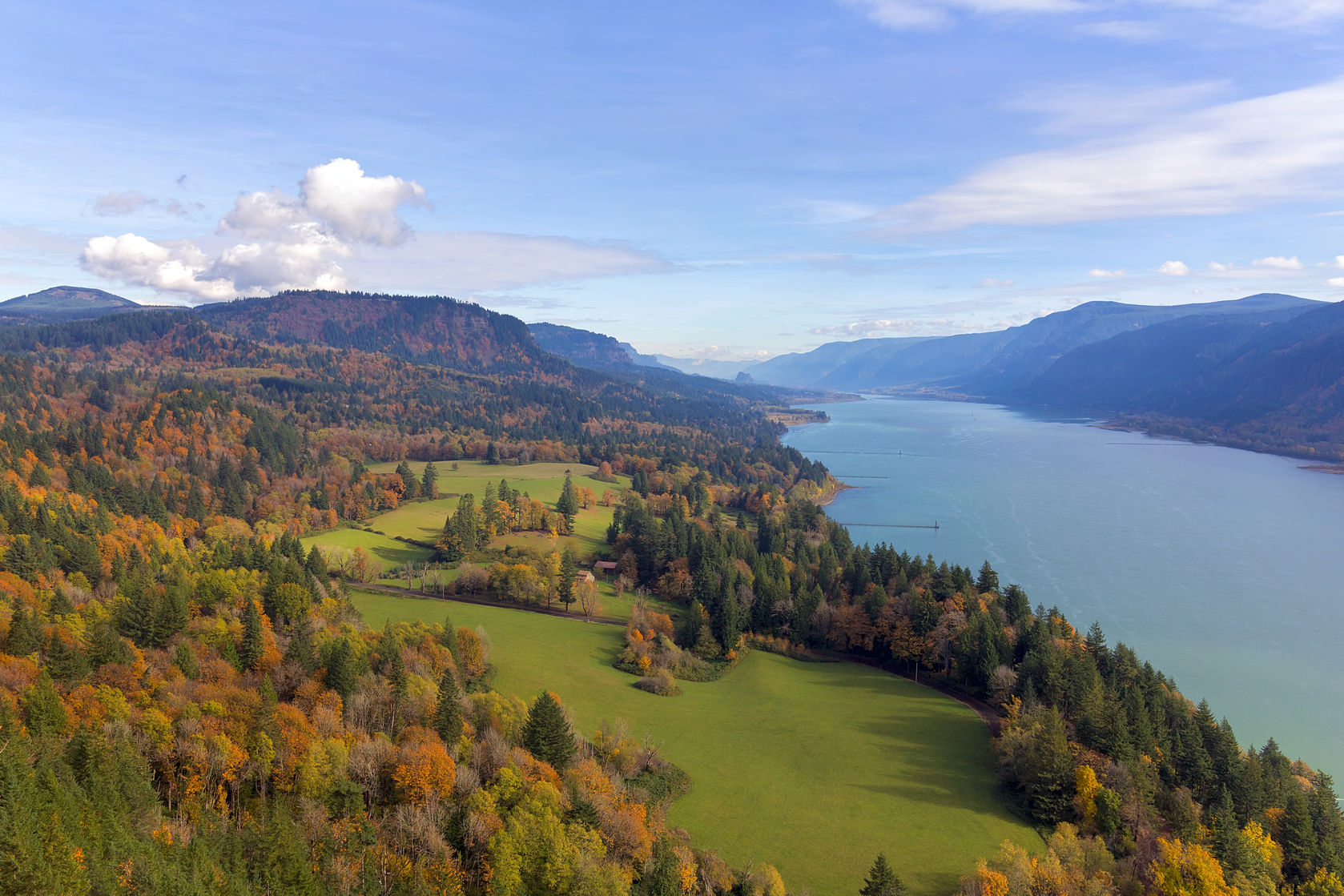
The Washington state “water year” October 1, 2014, to September 30, 2015, was one of the driest on record, due to lower-than-normal precipitation and higher-than-normal temperatures. Because precipitation in the Cascade Mountains fell mostly as rain and not snow, and because the snow that did fall melted early, snow-water available for irrigation in the Yakima and Kittitas valleys was only 25 percent of normal.
In October 2015, the Washington State Department of Ecology (DOE), the state’s lead on drought monitoring and mitigation, asked the Washington State Department of Agriculture (WSDA) to analyze the economic impacts of the 2015 drought on Washington agriculture. The task of quantifying the effects of the drought on agriculture fell to the WSDA’s Natural Resources Assessment Section (NRAS). An interim report describing the qualitative effects was submitted to the DOE on December 31, 2015, and a final report quantifying effects of the drought was published at the DOE on December 31, 2016.
In early October 2016, the WSDA-NRAS asked the Washington State Academy of Sciences (WSAS) to review the science supporting the methodologies and interpretation of the results of its study. The WSAS Committee that reviewed the WSDA interim report commends the WSDA-NRAS for its impressive effort to provide a reasonably thorough, timely, and quantitatively-based report on the economic impact of the 2015 drought on Washington agriculture. Our evaluation can be accessed here.
Related Posts
October 14, 2026
Research and findings focus on measuring and maximizing the value distributed solar and energy storage can deliver for Washington state.

July 16, 2026
New members were elected in recognition of their scientific achievement and willingness to work on behalf of the Academy for the benefit of Washington state.

July 16, 2026
WSAS members re-elected Jonathan Yoder as Treasurer; and elected Amanda Boyd, Mary Czerwinski, John Stein, and Judith Wasserheit as new board members.
